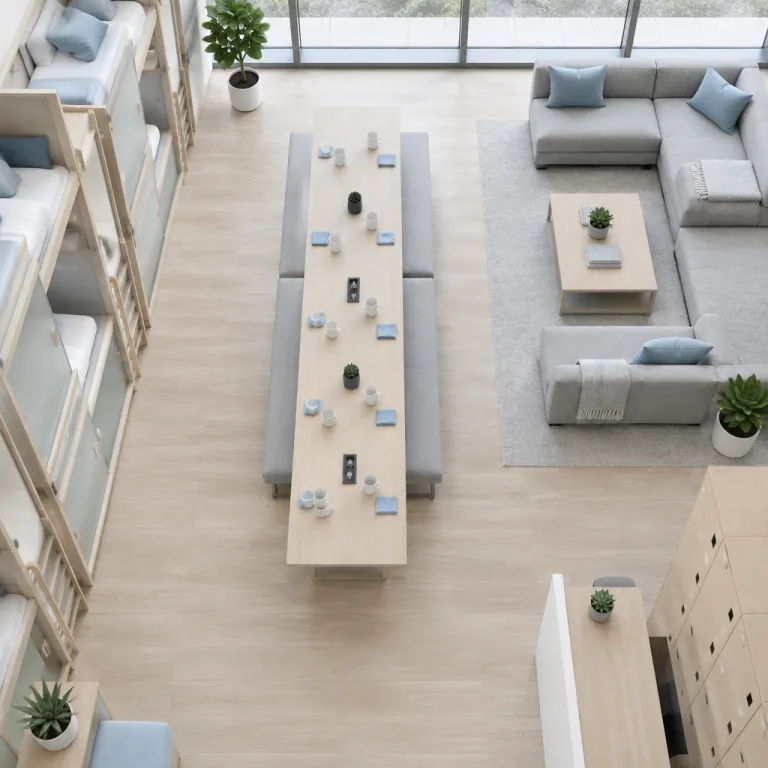
Why the modern hostel now rivals premium hotels
The modern hostel has evolved into a refined, design-led style of stay. In major destinations such as Los Angeles and across the United States, many travelers now compare these properties directly with premium hotels because the gap in comfort has narrowed dramatically. Guests who once searched only for classic hotels now check modern hostel options first when they want character, community, and a strong sense of place.
Luxury-focused hostels in the city often sit close to Downtown Los Angeles, near the convention center or in vibrant districts such as Koreatown and the Arts District, which makes them ideal for both business and leisure trips. A traveler flying into Los Angeles International Airport can open a map, filter for a modern hostel with private rooms, and reach a downtown location in less time than many traditional hotel options. This shift has turned the hostel–hotel hybrid into a serious competitor for any Los Angeles hotel that targets younger, design-conscious guests.
Price still matters, but it is no longer the only factor that defines hostels. Today, a modern hostel in Los Angeles County might offer a boutique-style rating, a rooftop terrace with a city view, and a shared kitchen that feels like a stylish loft rather than a student canteen. When travelers read reviews, they now compare each hostel property with nearby Los Angeles hotels, checking whether the bed quality, room layout, and social spaces match what they expect from a contemporary provider of upscale stays.
Design principles that shape a modern hostel experience
Design in a modern hostel is not decoration; it is strategy. Operators treat every room, corridor, and shared kitchen as part of a coherent narrative that must feel both local and international, especially in gateway cities such as Los Angeles in the United States. When you compare modern hostels with Los Angeles hotel alternatives, you will notice how carefully they use light, materials, and flexible furniture to make compact spaces feel generous.
Premium hostel–hotel concepts often borrow ideas from residential design rather than from large chain hotels. A double bed might be framed by warm timber, soft textiles, and dimmable lighting, while shared dorms use privacy curtains, individual shelves, and personal reading lamps to create micro-suites for each guest. This approach allows a modern hostel to offer a sense of retreat that many older hostels never attempted, especially in dense downtown neighborhoods where every square meter counts.
Travelers planning a stay from Monday through a long weekend should look beyond glossy photos and check floor plans when possible. A well-designed property in Los Angeles County will separate quiet sleeping zones from social areas, position the shared kitchen near natural light, and provide clear wayfinding so guests can navigate without constantly consulting a map. For a deeper look at how a design-focused modern hostel operates, guides such as what a design led hostel actually means explain why thoughtful layouts now rival many midscale hotel standards.
Art, locality, and the aesthetics of place
Visual identity is where a modern hostel can truly outshine many hotels. Instead of generic prints, leading properties in Los Angeles commission murals, photography, and installations that reflect Los Angeles neighborhoods, from South Los Angeles street art to coastal scenes near Santa Monica and Venice Beach. This gives guests an immediate sense of where they are, something that many chain hotels in the United States struggle to achieve.
In a premium hostel–hotel setting, art is often integrated into circulation spaces, stairwells, and even the shared kitchen, turning everyday movement into a gallery-like experience. A traveler might wake in a private room, step past a bold mural of the Downtown Los Angeles skyline, and then reach a lounge where local artists host workshops on Monday and Tuesday evenings. These touches make the modern hostel feel like a cultural hub rather than a simple bed provider, especially in creative districts of the city.
For travelers who value authenticity, this emphasis on local art can be a decisive factor when they check reviews and compare hostels with nearby Los Angeles hotels. Some of the most interesting modern hostels now collaborate with neighborhood galleries and collectives, as explored in resources such as how hostels use local artists to build identity. When you choose a modern hostel that invests in art, you are effectively choosing a property that sees design as a living dialogue with its city.
From shared kitchen to social hub : spaces that connect guests
Community is the defining luxury of a modern hostel, and design makes it possible. Instead of a single bar or anonymous lobby, many hostels in Los Angeles now create a sequence of social zones, from quiet reading corners to lively communal tables near the shared kitchen. This layered approach allows guests to choose their preferred level of interaction at any time of day.
In practice, a traveler arriving from the airport might first check into a calm reception area, then move toward a lounge where other guests plan hikes to a nearby national park or evenings in Downtown Los Angeles. Later, they might join a cooking class in the shared kitchen, where long tables, open shelving, and good lighting encourage strangers to cook together rather than eat alone. These design choices turn the modern hostel into a social hub that even many upscale hotels in Los Angeles County have begun to emulate.
Couples and small groups often worry that hostels mean noise and cramped dorms, yet premium properties now offer a wide mix of room types. You can book a private room with an en suite bathroom, a family room with multiple beds, or a compact dorm with high-quality bed design and secure storage, then still enjoy the social energy outside your door. For inspiration, curated lists such as hostels where couples actually want to stay show how the modern hostel concept now serves guests who once booked only traditional hotels.
Location, access, and the role of digital booking tools
Where a modern hostel sits within a city can transform your stay. In Los Angeles, some of the most sought-after hostels cluster around the city center, close to the convention center, while others stretch toward the beach or the edges of Los Angeles County near a national park. Each location offers a different rhythm, so travelers should match their priorities with the property map before confirming any booking.
Digital tools now make this process far more transparent than in the early days of hostels. On most booking platforms, you can fill in your travel dates, filter for a modern hostel or hostel–hotel hybrid, and then view each property on an interactive map that shows distance to the airport, public transport, and major sights. When you compare hostels with Los Angeles hotels, pay attention to walking distances in kilometers, typical travel time during rush hour, and whether the area feels active or deserted after dark.
Guest reviews remain essential, especially in large markets such as Los Angeles in the United States where options range from basic hostels to design-led boutique properties. Look for detailed comments about noise levels, bed comfort, cleanliness of the shared kitchen, and how staff handle late-night check-in. If several guests mention that a modern hostel in Downtown Los Angeles feels safer or more welcoming than nearby hotel alternatives, that is a strong signal that the property understands both design and hospitality.
How to evaluate quality in luxury and premium hostels
Assessing a modern hostel requires a slightly different lens than evaluating a conventional hotel. You still care about the basics such as a comfortable bed, a quiet room, and reliable Wi-Fi, but you also need to consider how well the property balances privacy with social energy. In cities like Los Angeles, where both hostels and hotels compete for the same guests, this balance often defines which properties earn repeat stays.
Start by checking whether the hostel–hotel offers clear information about room types, from private doubles to shared dorms, and whether floor plans show how many beds share each bathroom. A premium modern hostel should also explain how it manages security, including key card access, lockers, and staffed reception hours, especially in busy areas of Downtown Los Angeles or South Los Angeles. When you read reviews, pay attention to comments from solo travelers and couples, because their expectations often mirror what most guests quietly hope to find.
Finally, consider how the property communicates its design philosophy and local connections. A serious operator of upscale hostels will highlight collaborations with neighborhood businesses, sustainable materials, and perhaps partnerships with guides who lead trips to a nearby national park or coastal beach. If a modern hostel in Los Angeles County presents itself with the same clarity and confidence as leading Los Angeles hotels, while still offering flexible social spaces and fair pricing, you can book with a high level of trust.
Key statistics on modern hostels and premium stays
- Industry commentary from platforms such as Hostelworld indicates that average daily rates for design-focused hostels in major United States cities have risen noticeably over the past decade, reflecting rising demand for higher-quality shared and private rooms. Exact figures vary by market and year, so travelers should always check the latest reports for current numbers.
- Analyses published by large booking groups, including Booking Holdings, suggest that properties labeled as modern hostels with strong guest reviews for cleanliness and design can achieve higher occupancy than traditional hostels in the same neighborhoods, although the precise percentage uplift depends on location and season.
- In Los Angeles County, tourism summaries from recent years show that a significant share of international visitors now stay within roughly 5 kilometers of the city center or beach areas, which helps explain why many new hostels and hotels cluster around Downtown Los Angeles and coastal districts.
- Surveys cited by the American Hotel and Lodging Association during the 2020s suggest that younger travelers are more likely than older age groups to choose a hostel–hotel hybrid when it offers private rooms, a shared kitchen, and strong social programming, even if they could afford a conventional hotel.
FAQ about modern hostels and premium booking
How does a modern hostel differ from a traditional hostel ?
A modern hostel focuses on high-quality design, better privacy, and curated social spaces, while traditional hostels often prioritize only low prices and basic beds. You will usually find private rooms, improved sound insulation, and stylish shared areas in modern hostels, especially in large cities such as Los Angeles. Many of these properties now compete directly with midscale hotels in terms of comfort.
Can a modern hostel be suitable for business travel ?
Yes, many modern hostels near a convention center or city center now offer fast Wi-Fi, quiet work zones, and private rooms with desks. In Los Angeles, some hostels even provide small meeting rooms and early breakfast options for guests with tight schedules. Business travelers who value location and atmosphere often find these properties more engaging than standard hotels.
What should I check before booking a modern hostel ?
Always read recent guest reviews that mention cleanliness, noise, and staff responsiveness, then compare photos of the room types you are considering. Use the property map to confirm distance to the airport, public transport, and key sights such as the beach or a national park. Finally, verify policies on check-in times, luggage storage, and security, especially if you arrive late at night.
Are modern hostels safe for solo travelers ?
Well-managed modern hostels usually offer strong security measures such as key card access, lockers, and staffed reception, which makes them suitable for solo travelers. In busy destinations like Los Angeles County, choose properties with many positive reviews from solo guests and clear information about neighborhood safety. Opting for a hostel–hotel hybrid with private rooms can provide extra comfort while still giving access to social spaces.
How do modern hostels keep prices lower than comparable hotels ?
Modern hostels reduce costs by offering a mix of shared and private rooms, using flexible furniture, and concentrating amenities in communal spaces such as a shared kitchen and lounge. This allows them to spread operating expenses across more guests without sacrificing design quality. As a result, travelers often enjoy a stylish stay in central areas such as Downtown Los Angeles for less than many nearby hotels.